by Bev | Nov 24, 2016
 I And whatever you do, in word or deed, do everything in the name of the Lord Jesus, giving thanks to God the Father through him. Colossians 3:17 I enjoy the fall. I look forward to National Novel …
Source: Giving Thanks « Gabby Care
by Bev | Oct 23, 2016
National Day of Writing 10/20/16
Goddard High School, Roswell NM
Fantasy Fiction
Many consider George MacDonald’s, Phantastes written in 1857 as the first work of modern fantasy fiction, not least because it was a tale for adults. It greatly influenced many writers including C.S. Lewis and J.R.R. Tolkien.
Our rich history of literature has always included tales and verbal tellings of the wondrous, unimaginable, and horrific. Often these tales were crafted to instruct and warn, sometimes based on visions of afterlife or another world.
If you study the roots of fantasy, you will find deeply spiritual men and women, and often you will find clues to sustained inspiration.
For instance, MacDonald was said to be influenced by the French fairy tale Undine. C.S. Lewis was influenced by MacDonald, but also by Norse myth and spent some time with his peer J.R.R. Tolkien unraveling and relearning Old English to better understand and engage with the epic poem. Beowulf.
William Morris was a textile designer and a contemporary of MacDonald and G.K. Chesteron. He was an artist with a strong interest in Icelandic literature, and is responsible for translating and keeping much of the Norse myth alive in English today. But what drew me to Morris was his illustrations and textiles. They are richly detailed and inspiring.
In today’s fiction market Fantasy covers everything from high fantasy and faery to science-fiction, horror, paranormal, dystopian and a few things which defy definition and are lumped into speculative fiction.
So, I have some questions for you. What makes you want to write fantasy, or are you here because you needed a place to land?
What are your favorite stories, movies included?
Who inspires you, truly, not just the coolest answer?
What I find most fascinating in the world of other worlds is inspiration. Where do we get it? What is it made of? How do we sustain it?
That is where I’ll leave off talking for discussion. These are questions for you to answer.
Your assignment: pick two of the following, but one has to be the monster/villain
Create a monster, an enemy, or a villain. Give him or her an element of charm and style. Give him or her a weakness. Give Him or her a power. Give him or her a powerful desire.
Create a hapless hero or heroine. Give him or her a weakness. Give him or her an ugliness, a seedy underside. Give him or her a quest that has to do with the villain.
Create a setting or world. Give it a currency. Give it a wonder. Give it a horror.
Play further here on this blog or, talk to us at writingrogues@live.com
(Re-posted from justonebeggar.net)
by Bev | Aug 3, 2016
 So a tiny brag, I usually stick to fun, light, genre fiction, the penny dreadful, but I try to read a bit of the hard stuff from time to time. Last month I listened to Light in August, read by Will Patton. Those of you who listen to James Lee Burke will know Will Patton’s talent for southern voice. So, yay me.
As I read through a few reviews and notes about the book I saw many wordy entries as if reviewers in their great respect for Faulkner’s work were trying to mimic him, some successfully but others, not so much. I’ll try to keep this brief.
Yes, it is Faulkner and even the title is poetic. In his Nobel acceptance speech, Faulkner ends by saying, “The poet’s voice need not merely be the record of man, it can be one of the props, the pillars to help him endure and prevail.” With this book, Faulkner achieves a quality of poetic prose that surely goes beyond simple record to speak to beauty and creation.
As a novel, rather than narrative poetry, Light in August is a multi-headed beast, partially sketching the stories of Lena Grove, Joanna Burden, Joe Christmas, the McEacherns, Lucas Burch, Byron Bunch, Reverend Gail Hightower, Doc Hines and several others. Faulkner tells of Lena’s pregnancy and her search to find the father of her baby who left when he heard of her condition. It tells of Joe Christmas an orphaned child who lives as a white man, but thinks he has black blood. The book images his struggle to accept his life and his search to silence his history. It tells of a Presbyterian minister and a Baptist minister, both failing for different reasons. They meet in Jefferson in Yoknapatawpha County.
Faulkner’s characters are beautifully imagined, but they remain on the page entrenched in a hopeless human struggle with little grace or true charity. They are almost caricatures, so firmly are they held by Faulkner’s pen. I noticed that, while the characters all meet, they scarcely interact. Their situations impact each other through the reader rather than through each other. The reader is distant from the characters and the characters are distant from each other.
While I wouldn’t call this Dark in August, I might consider the title separately. Faulkner describes the light in many places in this book, but I see the golden joy of August’s light differently. It is light that quickens the harvest, no longer as fierce as the sun of July. But if he had titled the book, the Fierce Light of July, it just wouldn’t have worked, accuracy notwithstanding.
As I mentioned earlier, I have read Faulkner before and enjoyed his rich voice, but I don’t remember the stories as much as the images and a sense of personal victory upon completing one of his books along with a desire to return to it at a later date.
Read Light in August for the poetry and the mastery of Faulkner’s rich voice. Read it to be drawn into grateful prayer for the Good News of Salvation.
Also posted on justonebeggar.net, Goodreads and writingroguesrant.blogspot.com
Thanks for reading BEV
by Bev | Jul 12, 2016
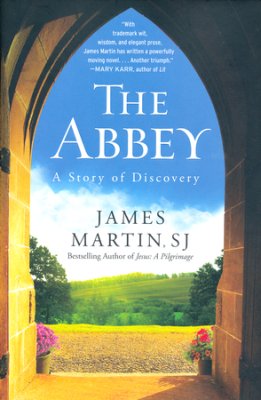 The Abbey is James Martin’s first work of fiction, and it’s my first time reading his books. One reviewer suggested an actual story was missing. I chuckled. I enjoyed the book even without much story.
Martin switches points of view between three protagonists, a divorced single mom struggling with the death of her young son, a former architect whose career is in shambles, and the Abbot of Saint Philip and James, otherwise known as PB & J. The book reads more as three intertwined short stories of faith and healing. The characters interact to weave a story that the reader pieces together without the characters much realizing the whole.
Set in an abbey, the PB & J Abbey that rightly makes jam, reading the descriptions and following the author through the halls, placed me firmly in the location, a location reserved for prayer study, work and devotion. The monks make jam. I like jam. The monks work hard and pray harder. This delights me even as I write.
The villain of the book is scarcely actualized. He/she/it comes from within each character. For the single mom, it’s her own grief that turned to bitterness, for the young architect it’s his appetites, and for the Abbot it’s occasional regrets and nostalgia for the outside world.
While The Abbey might be more accurately described as a novella I enjoyed it mostly for the love Martin clearly demonstrated for his fictional flock. He doesn’t force them into a sudden acceptance of Christ. Instead he nudges, suggests prays and they do what people do, they muddle around, get lost, rage, stumble, pray and wonder.
Read this book for the setting. Read this book for an experience of being part of a cherished flock.
Thank you for reading. BEV
Also posted at http://www.justonebeggar.net/ and Goodreads and reblogged to writingroguesrant.blogspot.com
by Bev | Jul 9, 2016
Thank you for this review. I also enjoyed the book, particularly for its assurance.
by Bev | Jul 4, 2016
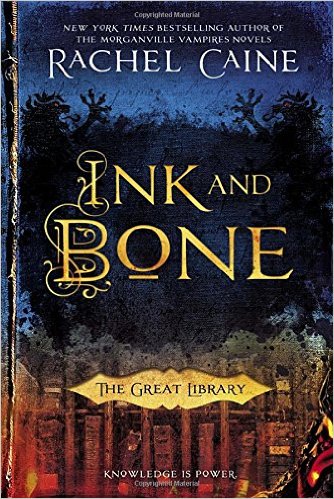 The sequel to Ink and Bone titled, Paper and Fire, comes out this week, so I thought a review might be timely.
Some have likened Ink and Bone to Harry Potter meets the Book Thief and even Hunger Games. I see the similarities, but I’m not quite there. I think Ink and Bone stands as a fresh approach, but lacking Rowling’s whimsy and magic or Zusak’s narrative voice, or Collins’ terse strength. I haven’t finished reading the Book Thief yet, so I may revise these comments later. I read some reviews of Ink and Bone that didn’t care for the opening, but I thought it dropped me into Rachel Caine’s novel in a compelling way and led me straight to the pivotal scene with the ink licker.
Usually, I quibble with a book about books, but this one worked well. It is a ‘what if’ fantasy that asks what if the Library of Alexandria never burned. What if the knowledge contained in the library served as the world’s currency and ownership of books containing that knowledge was forbidden? The world’s law and government are ordered through the Library and the Library watches and records every person’s life through electronic journals. Those who choose to abandon their journals and fight against the control of the library are branded heretics and burners often electing to set themselves and their journals on fire in a bid for the ultimate freedom of death.
The main character, Jess Brightwell, is the son of a book smuggler. Due to his father’s business, Jess has held and read many rare books and has an uncanny sense about them. Rather than follow in the family trade, Jess successfully tests and receives a berth at the Library’s training facility in Alexandria. Enter the school setting and the similarities with Harry Potter and a thousand other fantasies. This school tests many skills while imagining Alexandria in 2025 as the seat of global power with its library still intact and the people of the Library: Scholars, Guarda and Obscurists as legislators, law enforcement, imprisoned magical minorities who preserve absolute dominion of the Library.
I agree with one reviewer who noted that the story breaks down when we learn that all people have access to all books through their electronic journal. I did wonder what difference it would make if all written work was available electronically to all mankind. Only a single study was banned and removed from access; that being the repeated invention of the printing press. I liked the idea, but a more in depth look, something beyond the nature of light YA science-fiction fantasy, would probably ruin the story making it too cumbersome.
This brings me to my final pint (oh oops, perish the thought of a final pint) point. Rachel Caine does go the extra mile, so to speak in studying the effects of the printing press through the historical notes at the beginning of the chapter. These are rightly called Ephemera from the Greek meaning not intended to last the day, something not meant to be retained or preserved and definitely not preserved in the codex. In these we learn backstory and history and family connections. We read coded messages and learn the history of the resolute printing press, and its connection to major characters in the book, we also read of the corruptive nature of power in the twisted logic of the Library’s elite. Because of the Ephemera, I consider the book a bigger work and would re-read it. These notes in the front of the chapters cause me to think of politics over lives, worldly treasures over love, and re-writing history over truth. It’s a keeper. Thank you for reading and thank you, Rachel Caine, for writing.
Also posted on Goodreads, justonebeggar.net and writingroguesrant.blogspot.com
 I am a mother, author, engineer, farmer, occasional actress, and incurable dog-sap. I think things and write things and embarrass myself often.