Picture Sherlock Holmes. You’re almost certainly seeing a deerstalker cap, a tweed hat with a brim at both ends and flaps over the ears.
Here’s the surprise: Arthur Conan Doyle never named it. In “The Boscombe Valley Mystery,” Holmes boards a train in a “close-fitting cloth cap.” In “Silver Blaze,” Watson mentions an “ear-flapped travelling-cap.” That’s as close as the text gets.
The deerstalker came from the illustrator Sidney Paget, whose drawings for The Strand Magazine in 1891 put Holmes in the hat and an Inverness cape. It was a sensible choice, because the story takes him to the countryside of Herefordshire.
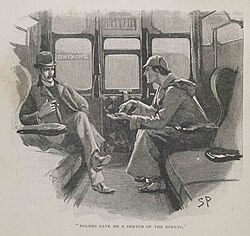
The deerstalker began as sporting gear, with peaks to shade the eyes and flaps to guard against wind and cold, and tweed was the fabric of the Victorian hunting moor. It was country gear, not city wear, but the look stuck. Later artists put Holmes in it in London too.
Then the stage took over. William Gillette played Holmes for decades, and the printed page and the footlights kept feeding each other until one image was fixed in the public mind.
The hat outgrew its origins, and today it says “detective” even with no detective inside it. The image that lasted came from what was drawn rather than what was written.
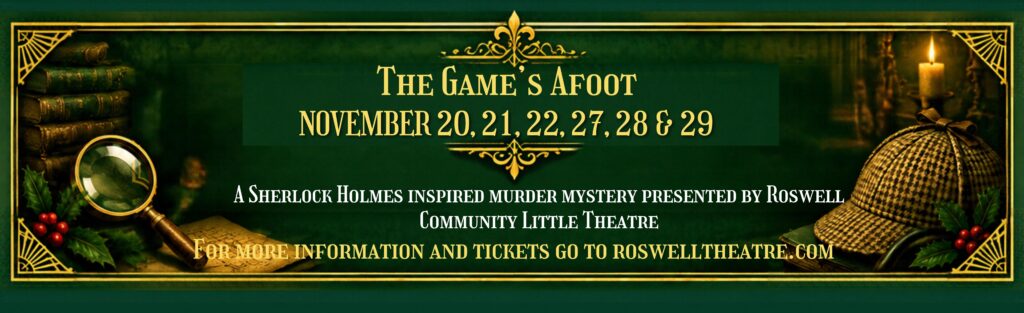
You can see William Gillette pretending to be Holmes in full costume, deerstalker and all, in Holmes for the Holidays, November 20, 21, 22 and November 27, 28, 29 at Roswell Community Little Theatre. Tickets are at roswelltheatre.com.
Leave a Reply