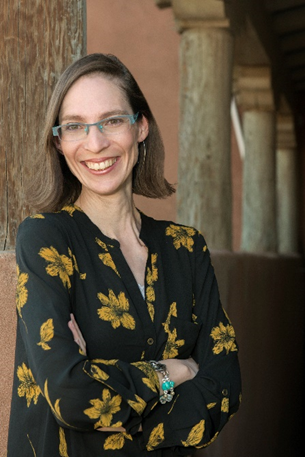
Alethea Hartwell, seasoned director, and actress for Roswell Community Little Theater (RCLT) has begun an improv program for the theater. The second production is in the works and scheduled for Jan. 28 at 7:30 p.m. inside of the theater. Alethea brings out the best in her actors. She shines in the art of improv, pulling delight and mischief from the impromptu performances of old and young thespians.
Married for 21 years to her high school sweetheart, Alethea grew up in Roswell where she homeschooled her daughter and son. Alethea’s parents drew her into theater at a young age. When she was 12, she “opened the door” of the murder room in the play, the Murder Room, along with several other special effects. This early theater work, along with church skits gave Alethea the “acting bug” and she has happily worked in theater ever since. Her directing debut was Wait Until Dark at RCLT in the old building about 15 years ago.
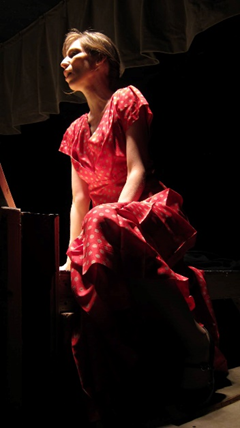
One of Alethea’s most memorable experiences in theater was in the comedy, Evening of Culture. It is a play within a play and Alethea starred as Juliet’s mother. In the performance, many malfunctions were scripted in. A flat was to fall and a bench was to kind of break. On opening night, as Alethea sat on the bench that was to “kind of break,” it broke completely, and she found herself abruptly seated on the stage floor. She managed to calm her giggles before they got the best of her, and the performance was well received. Of course, the bench was fixed to “kind of break” for the following performance. Alethea is a consummate professional. She knows her lines long before the off-script rehearsal and manages to turn even marginal characters into great fun on stage. When asked how she does this, she responds that she tries to think what the character would do in any given instance and then channels that into her role.
The nervous jitters on opening night, signal Alethea that she is off and running. They give her a boost of adrenaline. In a recent play that she was directing, one of the main actors fell ill between week one and week two of the live performance. Alethea stepped into his role and performed several of his scenes. Though she knew the lines, she wasn’t quite stage ready. However, the jitters and her professionalism got her through. Alethea is the perfect director for Improv between shows. Attend this event and laugh and enjoy on Friday, 28 Jan. We hope to see you there.
The book opens in 1945 Daniel Sempere’s father takes him to the Cemetery of Forgotten Books where eleven year old Daniel adopts a book titled The Shadow of the Wind, written by Julian Carax in 1935. Zafon layers the love stories of Julian Carax and Daniel Sempere, not so much as a book within a book, but more two stories within one novel. He sets these tales on the plane of surreal Barcelona, as much a character in the novel as either Julian or Daniel.
Seeking more information about Julian Carax, Daniel falls in love with the beautiful Clara Barcelo almost twice his age, when he seeks out Clara’s uncle, a noted book seller and collector. Clara knew of Carax through an old tutor and had long searched for titles by the author to no avail. Barcelo knows just enough to send Julian down several circuitous paths, chasing the whereabouts and intrigues of the missing author. Eventually Julian gives his prized book to Clara, hoping to garner her love.
Daniel meets Lain Coubert in the street one night following an argument with his father. Lain’s leathery, burned face scares Daniel. The monstrous man seemed to have stepped from the pages of Carax’s novel. Lain is the name Carax gave the Devil in Shadow of the Wind and he wants to buy the book from Daniel. Shaken, Daniel seeks out Clara to protect her from Lain and to hide the book. He finds Clara in bed with her lover. The enraged lover beats Daniel and throws him from the house, but not before Daniel finds the book.
Stumbling from the house, Daniel passes a beggar camped outside Clara’s door. The beggar invites Daniel to rest and share some cheap wine. Eventually, Daniel’ father employs this beggar, Fermin Romero de Torres.
Daniel conspires with Fermin to unravel the mystery of Julian Carax and the missing books. They learn that Julian and Fermin share a common enemy, who yet seeks to detroy Fermin and those who help him.
The plot unfolds into a history of Julian Carax that mirrors Daniel’s story. Daniel falls for his best friend’s sister, just as Julian had done years earlier. Brothers and rival suitors tear through the linked tales in past and current setting for the book, while Fermin and Daniel track further into the reaches of a colorful underbelly of Barcelona. Meanwhile, Fermin’s enemy seeks to kill both Fermin and Daniel.
I enjoyed the dense layering of plot and setting. At one point Daniel promises to show Bea, his beloved, a side of Barcelona that will make her want to stay, in the city and with Daniel. In showing Bea the city, Daniel reveals Barcelona to the reader, delighting, scaring and enticing. Fermin Romero de Torres establishes a running commentary on politics women and Barcelona adding delightful turns of phrase, sophistry and wisdom to the text. Julian Carax as well as the old librarian delighted me throughout.
Published in 1922, this novel continues to delight readers to this day.
I took to the book in the early pages when nervous submissive Mrs. Wilkins latches onto the idea of a holiday in Italy. The villa was advertised in the Times to those who like Wisteria and sunshine. Lotty Wilkins wasn’t rich but she liked Wisteria and sunshine. She reasons that April in Italy might be possible. Then she tenaciously makes plans despite herself and her anxieties.
Lotty knows of Mrs. Arbuthnot but doesn’t actually know her, yet Lotty sees her reading the same advertisement. Wondering and worried and not believing herself Lotty entreats Mrs. Arbuthnot to join her and at least inquire. It is the beginning of a journey and a mild but life changing adventure.
Eventually four women travel to Italy. Lotty is first freed of her nervousness and insecurities. Her newly sweet and true nature eventually works on the other three women who shed churlish affectations and begin to examine their lives in the beauty of a perfect April in San Salvatore.
In short chapters and different points of view the reader glimpses the human frailties and longings of each character. As I read I was slowly affected by San Salvatore also. It’s gently nature, sweet perfume, and remarkable scenery, worked some small magic even in me and my petty frailties.
I understand the movie is delightful. I will watch it this week and post a companion review.
Read this book for it’s gentle nudge at living a better calmer life.
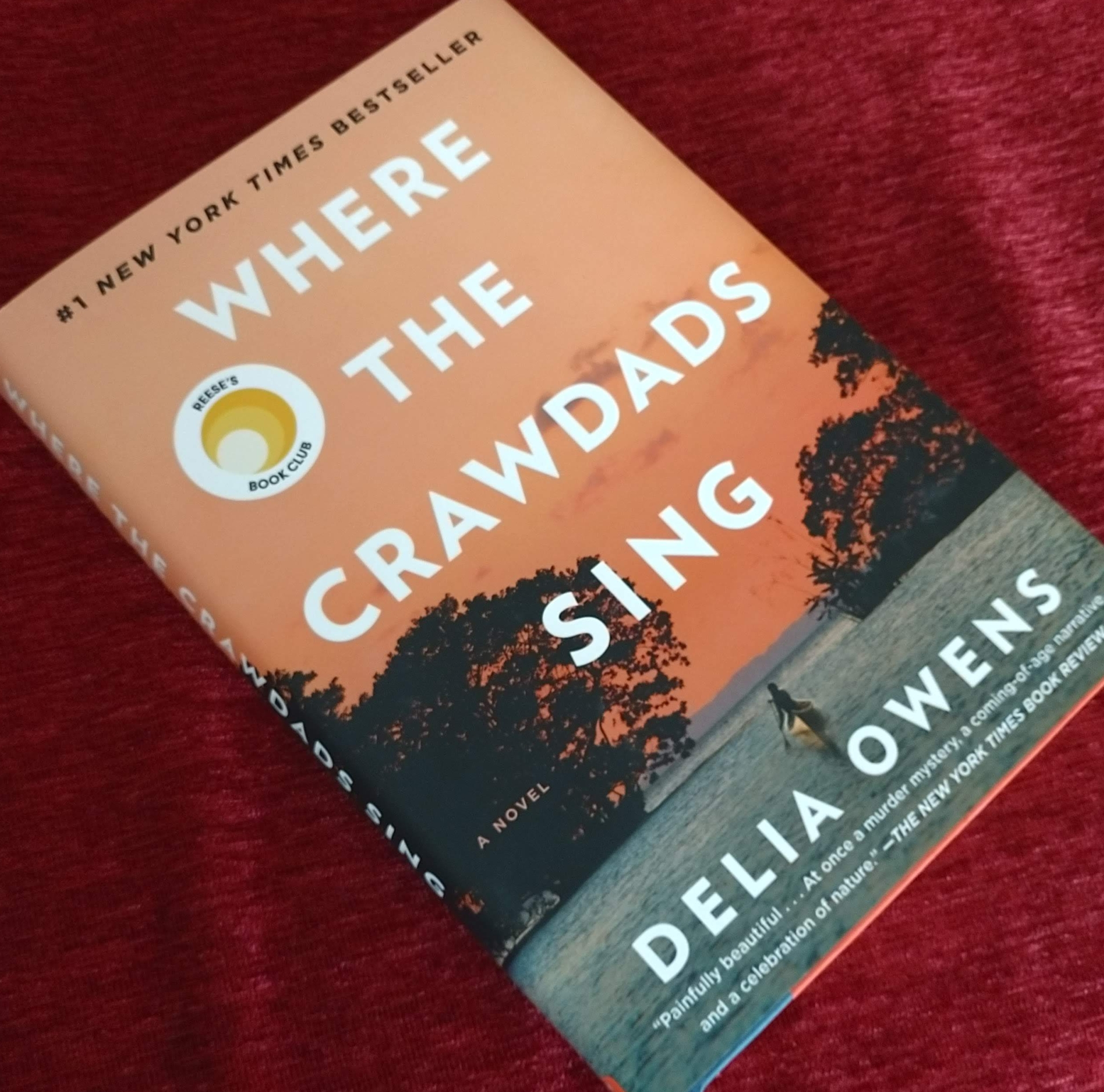
It is a romance, a family saga, a coming of age story, and a murder mystery rolled into one, often poetic, book. Owens writes from a remarkable understanding of nature. A quote from her website reads, “When you can feel the planet beneath your toes and trees moving about, you must listen with all your ears and,–I promise–you will hear the crawdads sing. In fact, it will be a chorus.”
This tells me much about the author and her debut novel. Owens spent over two decades studying wildlife in remote regions of Africa. As a result of this research, she makes the case that mammals in strongly bonded groups form those groups of exclusively females. In Where the Crawdads Sing, Kya is a female without a group and desperately wants one. Owens subtly makes the point that female bonding is in our DNA. Kya is abandoned by her biological mother, siblings and eventually her father. Her mother is the North Carolina marsh and her teachers are the animals that populate the marsh. Kya scrapes out a living and a huge education on the water’s edge, befriending rare and wonderful characters like Jumpin, the general store and gas station owner, and Tate, the young man and friend of Kya’s brother that teaches Kya to read. These people help her in her greatest times of trouble. Throughout the book, the characters are well-drawn and there are good and bad folk in equal measure. The marsh too, becomes a character as well as the town of Barkley Cove.
Not only does the author stay true to the theme of females forming groups but she speaks of predators and prey by Kya’s observation of those animals around her. The murder mystery carries this distinct theme along with many of Kya’s relationships. Kya speaks of the great blue heron as the color of gray mist reflecting in blue water. “And like mist, she can fade into the backdrop, all of her disappearing except the concentric circles of her lock-and-load eyes. She is a patient, solitary hunter, standing alone as long as it takes to snatch her prey.” The paragraph goes on to liken the heron to a predacious bridesmaid. it is chilling and gorgeous prose, speaking to the author’s clear understanding of nature.
Throughout the book, Kya’s understanding of nature and human frailty compelled me. In one passage, Kya can’t remember how to pray. She wants God to help bring back her mother’s garden, she wants God to bring back her mother. She struggles with her memory of prayer and faith and in the end finishes with, “Just forget it. No god’s gonna come to this garden.”
Later, when Kya reads her first sentence, she reads from Leopold’s A Sand Country Almanac, she reads the first telling sentence. “There are some who can live without wild things, and some who cannot.” Her friend tate who teaches her to read says there will never be a time when you can’t read. “It ain’t just that.” She spoke almost in a whisper. “I wadn’t aware that words could hold so much. I didn’t know a sentence could be so full.” I loved the double meaning hers. Kya cannot live without wild things. Kya is a wild thing, a great blue heron disappearing in the mist.
I read one review of this book that said the reader did not find Kya’s life believable and thus could never engage with the main character. I laughed with the reviewer because I too wondered at a young woman so isolated and yet able to make her way on tired grits and very little else. For me, this wasn’t a problem, but a wonder.
I enjoyed learning to survive with Kya, being mothered and taught by the marsh. I enjoyed her first taste of reading and thought back to my own, when black streaks and dots begin to reveal, not just words, but worlds.
If you haven’t read this book yet, I highly recommend it. I read it then re-read it because I hated to finish it.
Thanks for reading, and thanks for reading books. Bev
Well, I have a gentleman’s agreement on the sale of Chewy and I trust the buyer to tell me if he changes his mind.
My husband and I may have named the truck Chewy because the old Studebaker sounded like Chewbacca when he headed down the road. I wish I could remember for certain. There are so many things I can no longer remember. Never-mind all of that. Chewy is going to a new home. Chewy will be with a family that likes old things and enjoys restoring them. The home even has young’uns interested in old things.
Lonny bought the truck for me when I started a novel that featured a ’49 Studebaker truck. When Lonny brought it home and I drove it to Mom and Dad’s for the first time, my father put his hands in his pockets and frowned. He shook his head and said, “Studebaker was very good at making wagons. They weren’t very good at much else.”
I worried some about what my father thought. I respected him, but pretended I hadn’t heard. I liked Chewy for his blue paint and round top. I liked him because my husband bought him for me to encourage my writing. It was Lonny’s way of saying, “I support you. I may not read what you write, but I’m proud of you.”
We used to have fly-ins. My husband and I built an ultralight (which is a story for another time.) We would host other ultralight owners for a few days of games and feasting.
I had driven the Studebaker to work the day of one of these fly-ins. I came home just as the planes started arriving.
Lonny waved as I drove up and parked. His grin was broad, as if it wanted to jump off his face and give me a hug. I heard him telling one of the pilots about the truck.
Later he told me how much he enjoyed seeing me drive around in Chewy, how proud he was and how much delight he knew I took in driving the old blue Studebaker.
I remember that day now and wonder at how people can take joy in another’s pleasure. It touches me to know that Lonny and I truly delighted in each other’s happiness. It touches me that I tried to forget my father’s comments. I am glad that I relaxed and drove the old truck even when my father shook his head and complained.
But Chewy is gone now. It is bittersweet. I knew I would never get him running again and I hope his new owner will. I took down the new owner’s number. Maybe I’ll stay in touch. Maybe I could drive Chewy one more time. Probably not, but life has some strange twists.
Written by Caroline Fraser, Prairie Fires is a biography of Laura Ingalls Wilder, her parents, grandparents and daughter couched in a history and discourse of the American frontier.
The biography finds purchase in the final third of the book, describing how the Little House books came about.
In most of the reviews I’ve read, Little House fans adored Prairie Fires. They cut their ‘reading teeth’ on Wilder’s books, many learning how to read from the Little House books along with how to accomplish many other frontier tasks. I don’t disagree that Wilder helped form the frontier conscience of our nation, but I think this was unwitting on her part.
Wilder was not my first read. In fact, my mother tried to get me to read the Little House books but I found the work tedious and too shiny. (Funnily enough, I found Prairie Fires tedious also.) I knew even at five and six years of age, that I was being forced to swallow the Pollyanna without much story. I just couldn’t find a footing in the books and if the books were bad the television series was deplorable. My tastes ran more to fantasy, which I knew wasn’t real and enjoyed it all the more for it. I mention all of this ‘me’ stuff because I am an unreliable reviewer for this book.
I admired Fraser’s research but became bored with her preaching about the sins of early American governments. This nation is an easy target and often exploited. But as a writer she is surely entitled to her own soap box. I just thought the book would have been a much better read without the discourse.
The other thing I took issue with was the pressure of the ‘truth.’ Wilder wrote rosy children’s books. I think it would be clear that she had help writing them and that she kept to the sunny-side of major tragedies. I see no reason to dive into Wilder’s past in order to state the obvious and be so exercised about it that countless references fill the book. Maybe this is unfair to Fraser who is a talented writer and remarkable scholar. Like I said, I am an unreliable reviewer.
So why read the book? If you are interested in the American frontier, read this book. Farser’s research is superb.
If you treasured Wilder’s series, read the last third of the book. It is a well detailed story, if a bit skewed against Rose. Perhaps Rose was a quarter bubble short of plumb. I am not so convinced in this telling, which seems to rely on Rose’s political views as much as other facts. But I did enjoy how Wilder developed her stories and her skills.
The final reason to read this book is to join the discussion which is full and rich and very American. Thanks for reading. Bev
Published also at Goodreads and http://www.justonebeggar.net/

 Well, I have a gentleman’s agreement on the sale of Chewy and I trust the buyer to tell me if he changes his mind.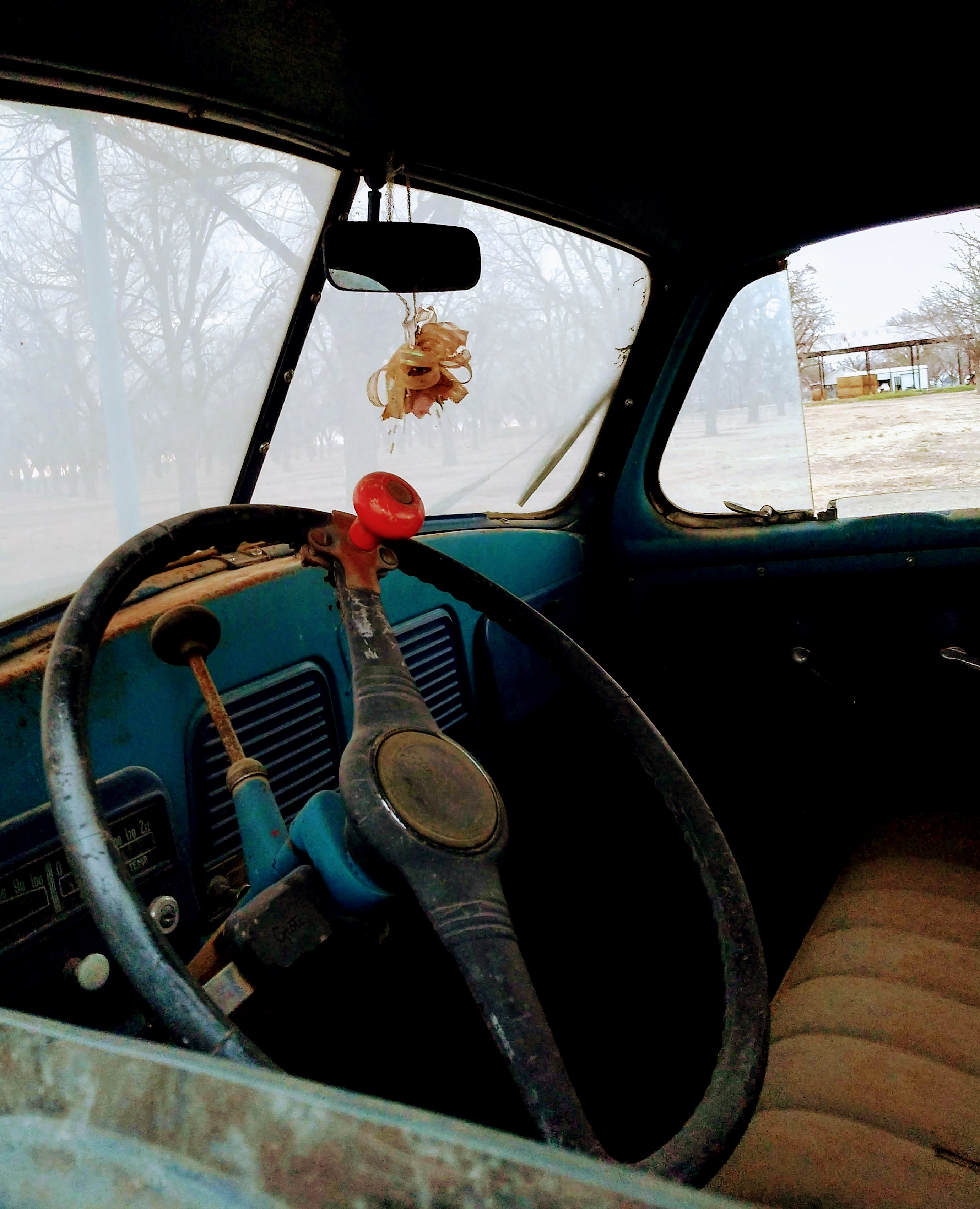

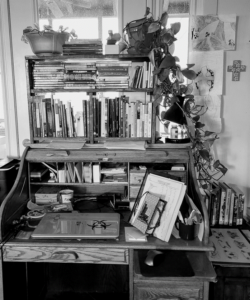 I am a mother, author, engineer, farmer, occasional actress, and incurable dog-sap. I think things and write things and embarrass myself often.