Author: Alethea Hartwell

  • Deerstalker and Holmes

    The Man Who Made Sherlock Holmes Famous Before the Movies

    Before anyone said “deerstalker” and “Holmes” in the same breath, there was William Gillette.
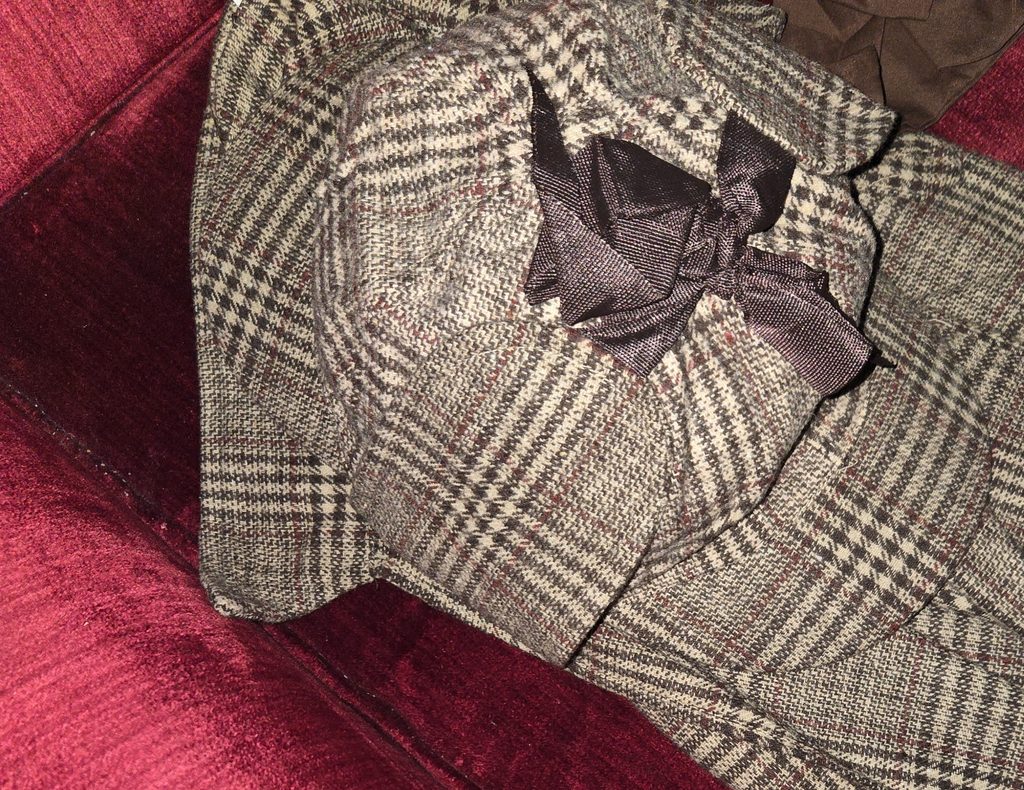
    Gillette was an American actor and playwright from Hartford, Connecticut, and in 1899 he brought Sherlock Holmes to the stage. He wrote the play himself, with Arthur Conan Doyle’s permission. Legend has it that when Gillette asked whether he could marry Holmes off in the script, Doyle cabled back that he could marry him, murder him, or do whatever he liked.

    Gillette didn’t just play Holmes, he defined him. His sharp profile became the model for the illustrator Frederic Dorr Steele’s Holmes in Collier’s. He is also traditionally credited with the curved pipe, which he could keep in his mouth while delivering lines. He played the part well over a thousand times across roughly three decades, and for many theatergoers he was Sherlock Holmes.

    His life was as theatrical as his work. He built a castle on the Connecticut River, with hidden rooms, secret mirrors and a miniature railroad, and he lived in it like a man who never quite left the stage.

    That castle is where our story begins. In Ken Ludwig’s The Game’s Afoot, or Holmes for the Holidays, Gillette invites his fellow cast members to a Christmas Eve weekend at his castle, where a murder soon turns the party into a real-life mystery. The man who played the detective has to become one.

    Holmes for the Holidays runs November 20, 21, 22 and November 27, 28, 29 at Roswell Community Little Theatre. For more information and tickets go to roswelltheatre.com.

  • OPERATION EXCALIBUR A novel by Alethea Hartwell

    Hartwell creates suspense in a pre-World War setting.

    Operation Excalibur, a new work of historical fiction by Alethea Hartwell, tells the story of Rudolf Diesel, inventor of the diesel engine. The book examines the mystery surrounding Diesel’s death. Although Diesel was reported to have died by suicide, Hartwell offers another possibility—one that turns a familiar historical conclusion into an enjoyable narrative of suspense and intrigue.

    The novel’s voice is clear and easy to read. The reader understands complex ideas without losing interest in the storyline. Hartwell’s research and attention to historical details create a vivid portrait of time and place. The reader experiences the settings and ambiance of bygone days along with the heart-pounding realities of pre-World War I Europe.

    Rudolf Diesel pulls the reader into a bygone era.

    Hartwell creates an interesting character in Rudolf Diesel. She portrays him as a thoughtful, compassionate, and unusual man with deeply held beliefs about how life should be lived. Diesel knew and befriended many historical figures, and Hartwell does not shy from including them in the book. These were captains of industry and invention. Hartwell gives us a fresh perspective without hammering the reader on the perceived ills of past practices. Hartwell also makes clear where the demands of fiction have required changes to facts, dates, or chronology; a welcome consideration for readers who value both imagination and historical accuracy.

    Taking place just before World War I, Operation Excalibur explores an era less frequently portrayed than the familiar landscape of World War II fiction. That choice gives the novel a distinctive atmosphere and opens a window onto a world poised at the edge of enormous change.

    The book’s sensory descriptions highlight the novel. The reader feels the rain, smells the air, sees the sidewalk, walks beneath the lights, and hears the rumble of trains along the platforms. We stand at the ship’s prow, enter the lecture hall, and rise in a balloon. These are not merely backgrounds for the action; they are places we inhabit. Hartwell’s writing grants the reader a repast in history and, for a time, we are truly there.

    For readers who enjoy immersive historical fiction, real-life mysteries, and richly drawn characters, Operation Excalibur is a rewarding offering.

    (A.I. assisted in drafting the review, but the ideas and reading were all mine, along with the final draft. Thanks for reading. B.A. Coots)

    Alethea’s book is available directly from aletheahartwell.com